Showing posts with label mystery. Show all posts

On J.K. Rowling's "Cuckoo's Calling"

No Comments »

NewImage

In this edition of Law & Order: Private Detective, TotallyNotRowling rips a story straight from the headlines. Row-Braith takes the sordid tale of Amy Winehouse and Pete Doherty and wraps it all in a entertaining-if-predictable bow.

After a string of improbabilities and coincidences, Detective Cormoran Strike is called in to investigate the death of Not!Winehouse, which had been written off as suicide by the tabloids and the police.

Following another string of improbabilities and coincidences, he's granted an assistant from on high. He doesn't want this assistant, oh no, but then she wows him with her ability to make tea and not ask any questions about, well, anything.

One would think the latter characteristic would immediately disqualify anyone from working in a private investigator's office, but mmm, biscuits. I would like to think that Mr. Strike had other reasons for keeping her on, but Robin*'s character is basically defined by three things:

  • a) Aforementioned ability to produce steaming cups of tea at opportune moments.
  • b) Recent engagement to a banker wanker named Matthew, who strongly disapproves of her line of work.
  • c) Being rather pleasant, occasionally.


In case you hadn't noticed, I'm more than a little bothered by the regressiveness of the females on display in this novel: one's a secretary (and aspires to be nothing more, apparently), and one's a dead object. Rowling's portrait of the dead girl tells us little about who she is, leaving us to trust the smarmy words of her brother, her fashion guru, her leechy best friends, and her boyfriend (Not!Doherty).

Now, I didn't set out to write such a negative review. While reading Cuckoo's Calling, I was generally enjoying the (very long) ride. But the facts remain: it doesn't really succeed as a detective novel (unless your idea of a good detective novel involves one man talking to millions of characters in sequence), and it doesn't really succeed as a cautionary tale on the perils of fame.

Where it does succeed is in providing a detailed portrait of the less glamorous parts of London (and the parts of London I spent considerable time in when I lived there). She has a strong sense of place and atmosphere, but couldn't quite bring that power to her character work.


*And isn't it adorable that they both are named after birds? Someone really needs to hit J.K. Rowling over the head with the terribly cutesy names she's saddled us with (Cormorant-Robin, to be fair, isn't as bad as Albus Severus Remus Dumbledore Potter).

Christopher Nolan's Anti-Nolan Masterpiece: Insomnia

No Comments »

NewImage

Christopher Nolan movies mean many things: angsty heroes with dead lovers, action scenes that whiz by so fast they leave you upside down, and plotlines that require devoted attention lest they become incomprehensible.

Enter Insomnia. There's a dynamic, interesting female lead (notably still alive!), a plot that owes more to careful characterization and mood-building than twists and turns, and most notably, a single action scene that isn't even part of the film's climax.

Nolan places us in the infinite sunshine of an Alaskan summer. I mention the setting because it means as much to the movie as the characters actions, weaving itself into every scene in surprising ways. Al Pacino's Will Dormer goes for days without sleep; is it because of the endless sunlight, or something else? Watch the way the sunshine breaks into particular scenes, even as he goes mad trying to block it out.

Hilary Swank's character, who starts out idealizing Dormer, quickly realizes something's amiss. She's patient in playing her hand, but you can see she's ready to at any given moment. Robin Williams plays the third in this triangle; he couches his murderous character with such a "man-next-door" sensibility that we're constantly forced to question whether he might actually be one of the good guys. Saying more would spoil the film.

Insomnia's a thriller that follows none of the traditional thriller beats; we know exactly who all the guilty parties are from the beginning of the film. What's more unusual is that they know as well. Circumstances force them all to dance around each other in perfect balance, electrons and protons, held apart by forces none could have foreseen. This dance provides more than enough tension to keep our interest. And so it happens that Nolan's most engaging movie is the one with the least action.

Have you guys seen it? What are your thoughts?

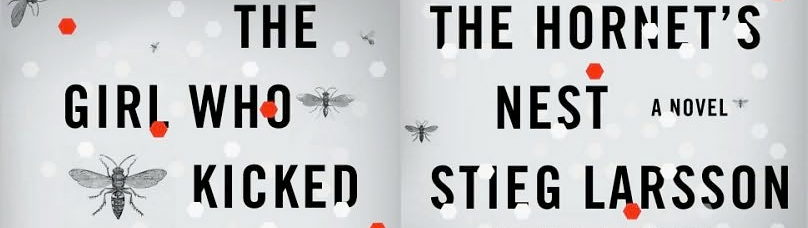
The Girl Who Kicked the Hornet's Nest

No Comments »

The third and final installment of Stieg Larsson’s mega-selling Millennium Trilogy opens with Lisbeth Salander, hacker extraordinaire, lying in critical condition in a Swedish hospital, a bullet buried deep within her brain. And if—if—she survives emergency surgery, she’ll still have to stand trial against a slew of trumped up charges covering everything from possession of an illegal can of Mace to attempted murder.

Salander, portrayed by Noomi Rapace, in the Swedish films.

Luckily, Mikael Blomkvist (former lover/investigative reporter/patron saint of lost causes) is determined to prove Salander’s innocence—or die trying. Literally. Dum dum dum!

Blomkvist, portrayed by Michael Nyqvist, in the Swedish films.

It's a good story, but also a surprisingly slow starter. The first 100 or so pages feature nothing but characters rehashing plot points already hashed quite thoroughly in the previous novel, which is, in a word, omgsoeffingirritating! (Okay, that’s not actually one word, but I stand by my statement.) Still, once the story gets going, it really gets going, and the trial sequence at the end is pure perfection. And while a few improbable things do happen in the characters’ personal lives—Blomkvist in love?—I suppose Larsson did have to wrap up the trilogy somehow.

All-in-all, a very satisfying conclusion to a very satisfying series. Or maybe not. Because, apparently, there is an as-yet-unpublished fourth novel that will only see print if the deceased Larsson’s family members can ever stop squabbling over royalties. Seems unlikely, but still . . .

Bring on more Salander?

The Girl Who Played with Fire

1 Comment »

The second installment of Stieg Larsson’s phenomenally popular Millennium Trilogy finds everyone’s favorite hacker, Lisbeth Salander, accused of killing two journalists about to publish an exposé on Sweden’s sex trafficking industry in none other than Millennium, the magazine owned and operated by Salander’s ex-colleague and -lover, Mikael Blomkvist. Now it’s up to him and him alone to prove her innocence before the police—or the real killers—track her down. Can Blomkvist save Salander in time? And, more importantly, does Salander even need saving?

Finally, Larsson puts the spotlight where it belongs—Salander!

Salander (aka Noomi Rapace) from the Swedish films.
Who wouldn't trust that sweet little face? 

And that—coupled with the cliffhanger ending—makes this a much more entertaining read than The Girl with the Dragon Tattoo. Because who the heck cares about boring old Blomkvist? Not me.

Bring on more Salander!

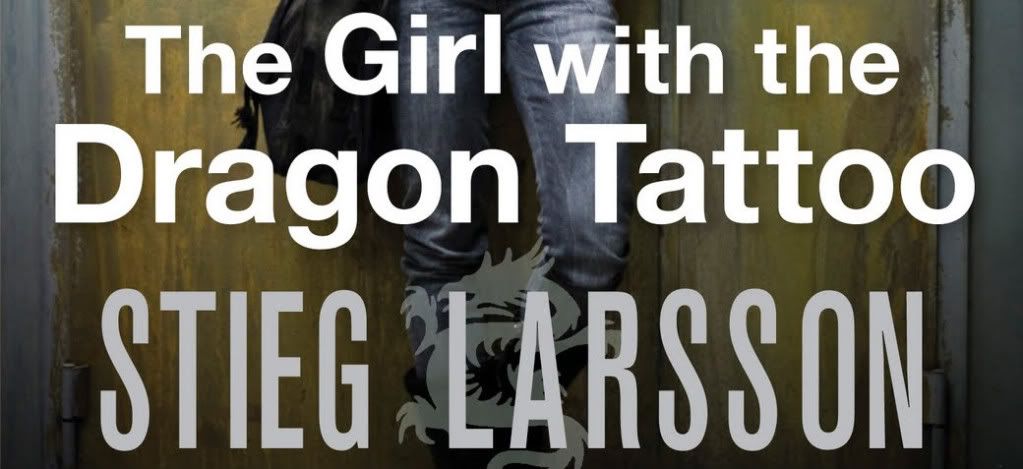
"The Girl with the Dragon Tattoo" or "How America Spent Its Summer"

2 Comments »


Unless you were living under a rock this past summer, you’ve probably encountered Stieg Larsson’s mega-selling Millennium TrilogyThe Girl with the Dragon TattooThe Girl Who Played with Fire, and The Girl Who Kicked the Hornet's Nest—in some form or fashion: heard it, seen it, bumped into one of the half-million copies seemingly required by law in every American bookstore.

This is all Americans read this summer.

The trilogy, already a hit in its native Sweden where it came out in 2005, didn’t conclude in its American format until this past June, making it the must-read event of the summer. Its final installment, Hornet’s Nest
debuted at number one on The New York Times hardcover fiction list and remains strong at number three 18 weeks later. Impressive, but nothing next to the 66 weeks of best-sellerdom the paperback version of book one, Dragon Tattoo, can currently claim. 

But enough with the pedigree.

Dragon Tattoo's sexy UK cover.

So what the first book, The Girl with the Dragon Tattoo, all about? Well, in a nutshell:

When disgraced journalist Mikael Blomkvist is offered a private job investigating the mysterious disappearance of Harriet Vanger, member of one of Sweden’s wealthiest families, it seems like just what he needs—a chance to flex his PI muscles while taking a much needed break from the suddenly hostile world of publishing. And besides, Vanger disappeared over 40 years ago, so it’s not as if Blomkvist will be in any danger. Or will he? Because soon Blomkvist is hot on the trail of a serial killer who will stop at nothing—nothing!—to keep him from uncovering the shocking—shocking!—truth . . .

Honestly? It’s a pretty standard murder mystery. Except, of course, for one thing—Blomkvist’s sidekick, the pierced and tattooed cyber punk prodigy known as Lisbeth Salander.

Salander, portrayed by Noomi Rapace, in the Swedish movie version.

Because Salander steals each and every scene in which she appears. Heck, she even steals the title—it's not called Blomkvist’s Book of Boring, after all—making the only real mystery in this novel why Larsson ever thought relegating her to mere sidekick status was a good idea. Because it's not. At all.

Bring on more Salander!

Powered by Blogger.