Showing posts with label Blog Noir. Show all posts

Glossary of "Harlemisms" from a 1950's Mystery Novel

1 Comment »

NewImage

Today I present a "Glossary of Harlemisms" from This Isn't Happiness. Before we get to the bottom of this, have a read through.

UMQ5D.jpg

If you get the sense that someone's having a laugh with the definitions of "black and tan" and "moo juice," you're not alone. They seem to have come straight from the addled brain of Tom Haverford (courtesy of TomHaverfoods.com):

Screen shot 2011 11 29 at 11 40 31 AM

Published along with a series of Mapbooks (1950's mystery novels that always had a map on the back detailing the scene of the crime), this "Harlemisms" guide appeared in New York Confidential, a Jack Lait and Lee Mortimer's guide book to the seedier side of the city (you can read more about Mapbooks at Dull Tool Dim Bulb).

I couldn't find a whole lot of information about New York Confidential, but Lait and Mortimer produced a controversial followup, Washington Confidential. This one got in trouble for highlighting some of the more scandalous haunts of politicians and public officials visiting D.C.

Here's my favorite of the Mapbooks at Dull Tool Dim Bulb - Alfred Hitchock's Rope:

NewImage

Delld


Tell me: what's your favorite Harlemism on the list?


Blog Noir: "Laura", or, Mad Men Is So Anachronistic

10 Comments »

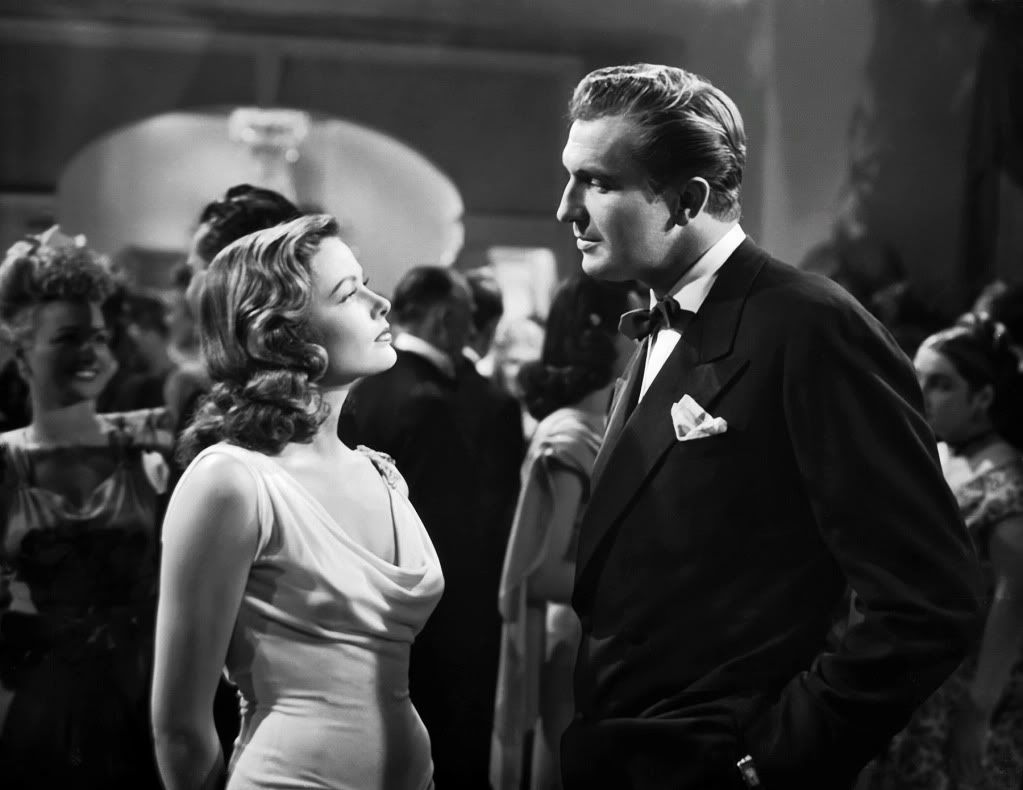
Annex20-20Tierney20Gene20Laura_05.jpg

(if you intend to watch this film, please don't read this review, for here there be spoilers. Watch it, then come back!)

I really enjoyed watching this, though there were so many things that just didn't work. This film is so beautiful in its construction, but is really let down by certain aspects of its execution.

Certainly there are smaller issues like, why are the cops bugging the apartment of a dead woman? Why does McPherson think to check the grandfather clock in the first place? Handwave, handwave.

But there are a number of more serious problems, chiefly centering on the character of Laura Hunt and her portrayal by Gene Tierney. For instance, why is she so dumb? A better actress might have sold the idea that a woman who is so wildly successful in her professional life* could be so willfully stupid in her personal life. I mean the only explanation offered is that she's a sucker for a "lean and hard body." Anyone in the audience could have told her that VINCENT PRICE IS A CREEP.

At least in the case of her falling for Shelby, we can accept that there are details we are not privy to, as the story of their courtship is recounted by Waldo, whom we resolutely do not trust. Hell, we've been TOLD not to trust him in the beginning of the film, when he says he often changes details to make stories more exciting (and to make himself look better, though he doesn't mention this explicitly).

Why, then, does Laura fall for Mark McPherson? Is it simply because he's another "lean and hard body"? It's clear why he falls in love with her, this idealized image of a beautiful dead woman who only lives on in a dramatic painting over the mantel. But there's literally nothing to explain her sudden love for McPherson apart from Waldo's intimation that she's flighty, which certainly doesn't seem true based on Tierney's performance or what we know of Laura. If anything, Laura is too steadfast and too bull-headed.

As mentioned before, everything we learn of pre-death Laura, we learn through Waldo's soft-focussed memories. She is described as an ideal of womanhood, an arbiter of taste and a paragon of ambition, just like Waldo himself. But when Laura comes back to life, Tierney's performance just isn't up to the challenge of simultaneously playing a flawed human being and a woman who would be idealized in such fashion not only by Waldo, but by everyone.

Sure, she's as unforgettably beautiful as Laura ought to be, but her performance lacks the conviction to sell us on the fact that not only is Waldo misremembering the details pertinent to the case, he does not remember Laura as she actually was. There are no subtle changes between how she plays Laura in misty-eyed flashback and how she plays Laura in reality. So when she gives her climactic speech to Waldo about being done with him, there's no emotional heft behind it, no mirror or recognition of the falsehoods and untruths that comprise the entirety of Waldo's character. To put it simply, her performance lacks depth.

Now I don't mean to rag so hard on this film, because as I said it has much to recommend it. The plotting is nearly impeccable, and has the perfect balance between the audience figuring things out and the detective figuring things out. Clifton Webb is superbly entertaining as the sort of Addison DeWitt gone horribly wrong, and it's wonderfully jarring to see a young Vincent Price play a suave "pretty boy". The dialogue is pitch-perfect.

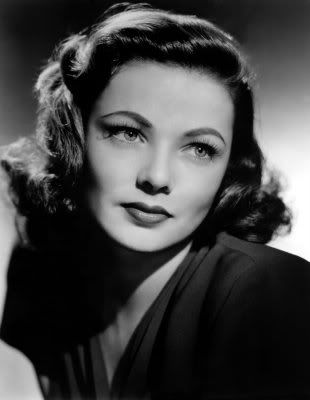
What bothers me isn't that what is left on the screen is bad, persay, but that there are a number of missed opportunities. But I can't help but think this movie ranks high up in all the AFI lists just because Gene Tierney is so damn beautiful (and she really is. She makes Rita Hayworth look like the girl next door).

GeneTierneyWomenManagementNewYorkBl.jpg

Let me know what you think about Laura in the comments!

*Laura's professional success reminds me of one of the chief criticisms of Mad Men that's becoming increasingly difficult to ignore: that Peggy Olson's journey is 20 years too late. The offices of Sterling Cooper are diversifying in the 1960's, while it's well documented that women were holding Don Draper's position in the 1940's (like Laura) and even African-Americans were integrated in the 1950's. Not to cheapen Peggy, who is one of my all-time favorite characters, but it does lend credence to the frequent critique of Mad Men as being all about the superficial trappings of the 1960's while inventing a social reality that simply does not exist. Likewise, Betty Draper's journey would have happened in the early 1950's, not the mid-60's.

film-noir-blogathon.jpg

Stop by at Park Circus for an ongoing series about film noir, particularly focussing on Gilda, which I wrote about previously here: http://theoncominghope.blogspot.com/2011/03/blog-noir-gilda.html

Blog Noir: Gilda, Or, Fifty Ways to Torment Your Lover

1 Comment »

gilda.jpg


Gilda is the rare movie that you can love and appreciate in spite of the fact that it leaves more questions than answers.

That said, it has a lot of elements working in its favor, particularly the actors.

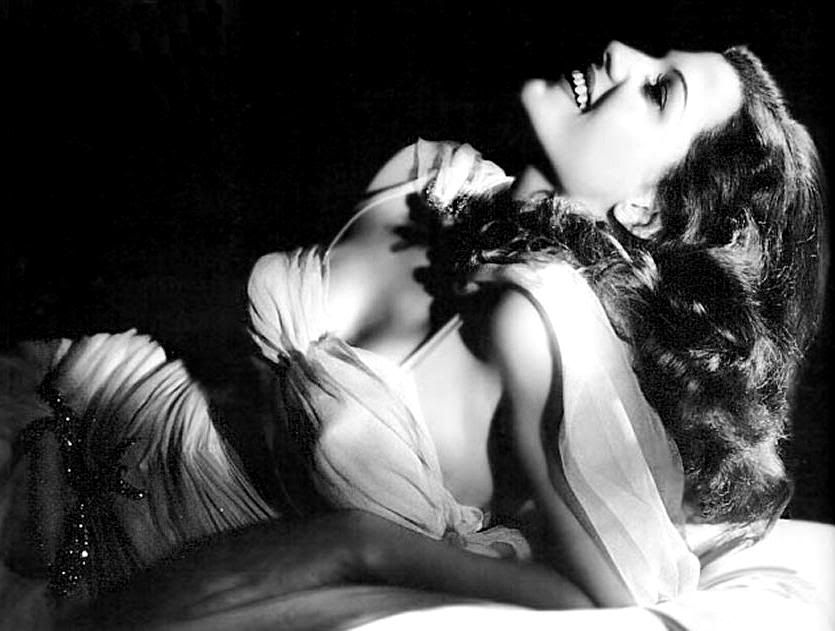
There's nothing I can say about Rita Hayworth that hasn't been said a thousand times before; she is stunningly beautiful and very capable in handling the contrasts between Gilda's dark emotional undercurrents and her oft-blinding brightness.

But I think Glenn Ford is the real coup here; when we meet him, he is characterized by an open, honest face and an easy wit, despite the fact that he's obviously a hustler. His blank physical appearance serves the chameleon character well; we see Johnny transform and distort in every direction possible as he faces growing success, power, torment and eventually redemption.

The direction was also startling; Gilda is not bathed in darkness as you might expect, but Vidor is careful and precise in his use of shadows and camera angles. There's very little that's showy, but everything works. Not to mention the pornographic camera gaze on Rita Hayworth's show stopping number; has there ever been a more erotic glove removal?

The film is also very clearly structured, which is in direct contrast to the seemingly incomplete story; we never do find out about the truth of Gilda and Johnny. That it is so well put together prevents the audience from feeling cheated; their past is something for us to put together in our imagination, and I bet what we imagine will always be ten times worse than the truth.

CONSIDERING THE HOMO-EROTIC

Critics and scholars get hung up with the question of original intent. But I would argue that's irrelevant in this case; we can only judge what appears to us on screen.* Even if you ignore the scary-comic scenes with Johnny, Ballin, and Ballin's little friend (a giant stick with the power of piercing!), there's considerable textual evidence to support the reading of homosexual leanings between the two male leads.

Let's look at Ballin. He is never represented as an altruist, and Johnny has no demonstrable skills when they first meet. So why invite him to his posh establishment? And what was a mover and a shaker like Ballin doing in the dingy alleyway in the first place, an alley full of hucksters and hustlers? It's not unreasonable to assume that he was trolling for sex, or something like it.

Later, once Johnny gets himself hired by Ballin, Ballin presents his first and most important rule: no women. He wants Johnny for himself. This clearly goes both ways. When Ballin returns from his trip, and announces his new wife, Johnny turns hateful and distrustful even before he knows that it's Gilda. The homoerotic angle adds a whole layer to the early antagonism between the two; he hates her in equal parts for coming between himself and Ballin, for showing up in his life at all, and for making him love her.

That none of these elements supersede the others perhaps reduces the relevance of the past relationship between Gilda and Johnny; what we are concerned with is how Johnny's conflicting desires play out now in Argentina. Youthful indiscretions are nothing but fuel to the fire; we don't need to know the facts to appreciate that it was heinous enough to mutate these two characters into shells of their former selves.

When Johnny steps into the role of Ballin, he becomes Ballin entirely; he absorbs his cruelty and sadomasochism as completely as he absorbs his penchant for shady business dealing. And that darkens his relationship with Gilda even further.

What makes the second act so compelling is that having done every thing they can to deny their love for one another, they can no longer resist its pull. And giving in warps them both; it gives Gilda a sense of security that she is incapable of recognizing as false, as she's never experienced the real thing. And it gives Johnny a vehicle to exercise his newfound power and sadism. He can't deal with his desire for her, cannot even act on it, so he chooses to torment her in every way possible. Gilda is powerless as a woman, as an individual, as a lover. Their mutual obsession twists them both horribly out of shape.

These are not the emotions of children at play, no matter what Ballin believes of Gilda. And while the movie wants us to believe it's about sex; it's equally about power. Ballin has all of it until he's dead, then Johnny inherits it. And Gilda has nothing but her sexuality.


*I say it's irrelevant, but that didn't stop me from researching. And I found this:

“Women in Film Noir”, Edited by E.Anne Kaplan, chapter 8, footnote #3.

“According to Ford, the homosexual angle was obvious to them at the time; they could see the implications in the relationship between the two men in the early part of the film- nothing stated, just mood.”

From John Kobal: “The Time, the Place, the Girl; Rita Hayworth."

FEMINIST STREET CRED

Gilda is distinctive in that it's the first picture in Hollywood with a female screenwriter, female producer, and topline female star.

ONCOMING FIRSTS

-First Rita Hayworth movie (woohoo!)

-First classic film noir (shocking, I know!)


Powered by Blogger.