Showing posts with label Feature. Show all posts

Charles Dickens' Christmas Drinks

No Comments »

NewImage

This Christmas, we wanted to add some literary spice to your drinking.

Part of what made Dickens's work come so vividly to life was his attention to small details in small lives. This Christmas, you too can drink like Scrooge and Cratchit.

1. "Charles Dickens's Own Punch"

The man himself wrote the instructions for his eponymous punch in an 1847 letter to one "Mrs. F." (aka Amelia Austin Filloneau):

Peel into a very common basin (which may be broken in case of accident, without damage to the owner's peace or pocket) the rinds of three lemons, cut very thin and with as little as possible of the white coating between the peel and the fruit, attached. Add a double handful of lump sugar (good measure), a pint of good old rum, and a large wine-glass of good old brandy; if it be not a large claret glass, say two.

Set this on fire, by filling a warm silver spoon with the spirit, lighting the contents at a wax taper, and pouring them gently in. Let it burn three or four minutes at least, stirring it from time to time. Then extinguish it by covering the basin with a tray, which will immediately put out the flame. Then squeeze in the juice of the three lemons, and add a quart of boiling water. Stir the whole well, cover it up for five minutes, and stir again.

This would be the punch that young David Copperfield offers Mr. Micawber:

“But punch, my dear Copperfield,” said Mr. Micawber, tasting it, “like time and tide, waits for no man. Ah! it is at the present moment in high flavour.” (Chapter XXVIII - Mr. Micawber's Gauntlet)

2. "Smoking Bishop"

"A merry Christmas, Bob!" said Scrooge, with an earnestness that could not be mistaken, as he clapped him on the back. "A merrier Christmas, Bob, my good fellow, than I have given you, for many a year! I'll raise your salary, and endeavour to assist your struggling family, and we will discuss your affairs this very afternoon, over a Christmas bowl of smoking bishop, Bob!" (A Christmas Carol)

Smoking bishop was not actually a Dickensian creation. It was a popular tavern drink, which Dr. Johnson defines as "a cant word for a mixture of wine, oranges and sugar." I'd give you the recipe but there's a variety on the web, from Jonathan Swift to Dickens' own father.

3. "Negus"

"Mr. Feeder, after imbibing several custard cups of negus, began to enjoy himself." (Dombey and Son)

Negus might be found all over English literature (Jane Eyre drinks it when she heads to Thornfield Hall, it features at a Mansfield Park party, and it's ALL OVER Dickens).

But the definitive version comes from Mrs. Beeton herself, who describes it as "a beverage usually drunk at children's parties." If that were the case today, I imagine children's parties would look a hell of a lot like Buster Bluth on grape juice:

NewImage

Let's just say, the drink's not exactly virgin. Per Mrs. Beeton:

INGREDIENTS: To every pint of port wine, allow 1 quart of boiling water, ¼ lb of sugar, 1 lemon and grated nutmeg to taste.

DIRECTIONS: Put the wine into a jug, rub some lumps of sugar (equal to ¼ lb) on the lemon rind until all the yellow part of the skin is absorbed, then squeeze the juice and strain it. Add the sugar and lemon-juice to the port wine with the grated nutmeg; pour over it the boiling water, cover the jug, and, when the beverage has cooled a little, it will be fit for use.

Enjoy your Dickensian drinks, and a happy holiday to all!

Tuesday Three: Fictional New York Weatherpocalypses

No Comments »

NewImage

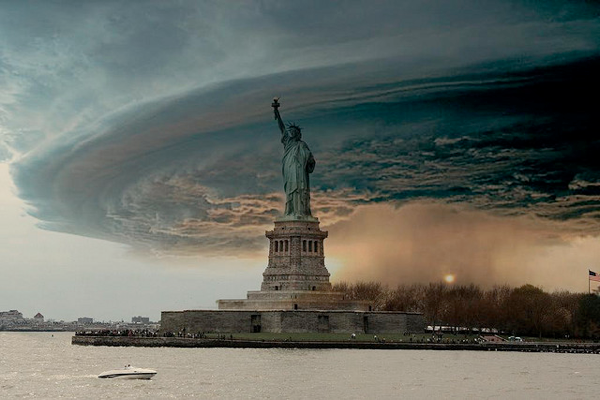
As Hurricane Sandy (known to some of you as FRANKENSTORM and to the more pedantic of you as THE METEOROLOGIST'S MONSTER) swaddles the Eastern seaboard with an extremely wet blanket, my thoughts turn to fictional New York weatherpocalypses past. These are their stories. DUN DUN.

1. The Day After Tomorrow

NewImage

My greatest Frankenstorm pleasure (apart from a couple of extra "work-from-home" PJ days) derives from a lingering memory of a bunch of Oxbridge holier-than-thous snickering through a screening of The Day After Tomorrow at an environmental agency I once worked at.

"New York city shalt not be graced by a hurricanous monstrosity in any reality!" they exhaled, along with hearty fumes of red wine and superiority.

Now I'm not going to pretend that The Day After Tomorrow offers a portrait of anything approaching reality, but complaining about a lack of verisimilitude in a Roland Emmerich film is a bit like complaining that an orange tastes of citrus. What The Day After Tomorrow DOES give us, in order of priority, is a shirtless Jake Gyllenhaal (at a time when he still belonged to the indie kids), and amazing special effects shots of the New York Public Library drowned in a snow-pocalypse (Brangelina aint got NOTHIN' on weather-related portmanteaus...).

2. AI: Artificial Intelligence

Screen shot 2012 10 29 at 3 04 49 PM

Because it's never quite obvious that the weatherpocalypse has already happened long before the start of the movie, AI's controversial coda hits you in the face like a sickly sweet rhubarb pie. When I first saw the movie, I was the classic "love the movie, hate the ending" viewer, until I watched it a second time and suddenly got it.

Setting plays an important role here, implying that Kubrick's overall intent was something closer to Tree of Life than to his usual bleakness. It's the the crisis of human existence boiled down to its most fundamental battle: the creations of man vs. the creations of nature. And the beauty of AI is that it's impossible to figure out exactly who's winning between those dueling spawns, though humankind clearly lost. Poor David clings to the last vestige of what once defined humanity, until even that's lost.

3. Planet of the Apes

NewImage

Planet of the Apes was a great obsession of mine as a kid (that includes all the offshoots, even the tv show, which inspired my first fanfiction, written as a lonely 10 year old in Jakarta, Indonesia). I haven't revisited the classic films since my tweens (I watched them so many times I can still see every scene in head), and as my mind developed, I came to realize that the films are microcosms of mankind's worst tendencies, especially the first film.

Planet of the Apes basically amounts to a wet dream for xenophobes, operating on the premise that as white men become the minority, the new colored overlords are barbaric murderers, concerned only with the downfall of the white men. (I'll take this opportunity to point out that the human women left in this particular white supremacist nightmare fantasy land LITERALLY HAVE NO VOICE).

But none of that dulls the impact of the incredible reveal at the end of the film, the only scene left from Rod Serling's original script for the movie. Taylor and Nova finally make it to the Forbidden Zone, only to find out that the "alien planet" he's landed on is, in fact, post-apocalyptic Earth. We don't know the exact circumstances that led to our Great Lady's semi-burial, but it's a decent guess that the climate had a fair bit of impact in the 700 years since Taylor and his fellow astronauts left Earth.

Conclusion

Weatherpocalypses fast and slow have long been a Hollywood obsession, so there are FAR more films that I haven't even touched upon. What are your favorites, whether New York or not?

Historical Ephemera: Cargo Cults of WWII

1 Comment »

NewImage

Cargo cults are a fascinating phenomenon in pre-industrial societies that have come into and then lost contact with more technologically advanced cultures. The most famous ones sprung up in the South Pacific after WWII, but they've existed for centuries.

Islands in the South Pacific played a key role in the war between US and Japan, who frequently air-dropped food, weapons and other supplies to aid their troops. This cargo often ended up in the hands of the islanders. Then, as you can imagine, when the war ended, so did the cargo drops.

The islanders, by that time, had come to perceive cargo as the root of the Western and Japanese wealth and power, and ascribed the air drops to blessings for ritualistic practices. So what did these cargo cults do? They copied the soldiers.

NewImage

The built air strips, control towers out of bamboo and planes out of straw, and even mimicked airplane sounds in the hopes that, by following the "rituals" of the soldiers, they too would be blessed with cargo. They marched with bamboo spears cut in the shape of guns and carry American flags like soldiers on parade.

NewImage

In a nutshell, they went through the visible motions without taking into account any of the underlying principles. Some of these cults still exist today, most prominently the "John Frum" cargo cult in Vanuatu. (It is rumored that they named their cult John Frum after the frequently spoken introduction from soldiers: "I'm John from Cincinnati, John from Alabama" and so on.

Since then, the phrase "cargo cult" is frequently applied to both science and design. Richard Feynman defined cargo cult science as science that goes through the motions of scientific investigation without any critical thought. Similarly, cargo cult programming is defined by The Jargon File as:

A style of (incompetent) programming dominated by ritual inclusion of code or program structures that serve no real purpose. A cargo cult programmer will usually explain the extra code as a way of working around some bug encountered in the past, but usually neither the bug nor the reason the code apparently avoided the bug was ever fully understood.

Smashing Magazine has a great article about how "cargo cult" thinking has contributed to the slow erosion of creative design.

Best trivia of all? Serge Gainsbourg wrote a song about cargo cults!

"I know of the the magicians who call to jets
In the jungle of New Guinea 
They scrutinize the zenith coveting the guineas
That the pillage of freight would bring them

On the sea of coral in the wake of this
Machine those creatures not deprived
Of reason those Papuans wait for vapour
The wreck of the Vice-count and that of the Comet"

City Lights: New York City

9 Comments »

mrxlS.jpg

Welcome back to City Lights, a series about films that feature particular cities. Today, we hit one of the greatest film cities of them all: New York, New York!

We're not exactly spoiled for choice here, so I added an additional qualification for myself: films feature the city as its primary setting, or represent an aspect of city life. Even so, I've ended up with a list that not only shows off my favorite New York movies, but includes some of my favorite movies of all time.

VWoNf.jpg

I just saw Sweet Smell of Success a couple of weeks ago, and my love for it grows with every passing thought. As I wrote in my review of it: "I don't think even Woody Allen has taken better advantage of the city of New York. The neon lights have never seemed quite so sinister. Like J.J's omnipresent glasses, they watch over events both seedy and magnetic."

This is New York before they cleaned up Times Square, a downtown that attracted lowlifes and power brokers looking to indulge in their worst selves.

F8DD2.jpg

From beginning to end, All About Eve captures the rhythms and cadences of the New York theater and all the vultures circling around it. As with Sweet Smell of Success, the only person with real power is the critic, in this case, Addison DeWitt. All these theatrical personalities live their lives and act out their petty coups like they have any control in their lives, and ultimately, loving the theater means worshipping Addison. The only one who seems immune to Addison's power is, oddly enough, Margo herself.

NG5q9.jpg

Everyone has their guilty pleasure romantic comedy, and Serendipity is mine (I am not even slightly ashamed). There's something magical about a rom-com that takes the preposterously coincidental nature of the genre and integrates it into the plotline.

So who cares whether they know each other, like each other or anything else, all that matters is that they find Love in the Time of Cholera and ice skate to the sweet dulcet sounds of Nick Drake. Along the way, they hit every New York tourist trap.

Swz5g.jpg

Annie Hall: There are probably other Woody Allen films that do a better job of showing off the city, but this is my favorite (I didn't particularly care for Manhattan. Blasphemy, I know!). Since I first saw it, I've seen it about ten times, and each time I love and appreciate new facets of the film (I really, really hate my "first impression" review of it, it's embarassing and jejune).

Annie Hall was the seed that grew into a full-fledged obsession with Woody Allen, whose films seem almost entirely guided by love: love of women, love of himself, and love of film. Because of that, he teases out the best aspects of the settings he chooses.

yqAEC.jpg

When I was wee, I was obsessed with this movie. The toy stores, the rube goldberg-like schemes to get Marv to fall on his face, the general being a fucking kid set free in New York! I was always drawn to the mischievous characters in fiction, whether Kevin or Dennis the Menace or the tomboys of Enid Blyton books.

But I'll be honest, this movie introduced me to New York. I learned of the Plaza Hotel and Central Park and Duncan's Toy Shop and Carnegie Hall. At 8 years old, New York was nothing more than a mythical place. This movie made it come alive.

Honorable Mentions: Planet of the Apes, King Kong

Tell me, what are your favorite Big Apple films?

Friday Five: Favorite Songs that Mention Writers

8 Comments »

Tori-Amos-From-the-Choirg-006.jpg

Thank god it's friday, eh? After spending the day on more serious things, I get to bring you a top five list in no particular order of no great importance. Today's topic? Songs that mention writers.

The rules are simple. The song must reference the author by name, it cannot allude to the author, or simply reference one of the authors' works (which unfortunately rules out a whole bunch of Led Zeppelin, Rush, and other prog-rock).

I tried to represent a number of different styles (this list could too easily have been all-folk).

Weigh in in the comments, of course.

Patti Smith - "Land"

I don't even pretend to know what this song is about, I just know it's great. It references Arthur Rimbaud, the great literary love of Smith's life:

"And I fill my nose with snow and go Rimbaud, go Rimbaud, go Rimbaud."

If you haven't read Just Kids yet, you really need to get on that. It's probably my favorite book of the past 2 years (and is now being made into an inevitably horrid feature film).

Here's a great live performance of the song:

Manic Street Preachers - "Faster"

This is just a fucking great song. It's an anthem for the nihilist, which I certainly loved in my youth (though I doubt I'd like it so much if I came across it today). I cannot possibly do it justice in words, so I'll quote you their own:

"I am stronger than Mensa, Miller and Mailer, I spat out Plath and Pinter".

Elsie Carlisle - "Pu-leeze Mr. Hemingway!"

The reference is right there in the title, but there are some very cheeky references within the song (this song was frequently banned in the 1930's):

"I love a brave man
With big he-man stuff,
But not a caveman,
So remember not to play too rough!"

Simon and Garfunkel - "A Simple Desultory Philippic"

I think every other Simon and Garfunkel song ever written has literary references, but I narrowed it down to "The Dangling Conversation" and "A Simple Desultory Philippic." For humor's sake, the latter won. Written to be a spoof of Bob Dylan, this song is pretty much the masterpiece of random author mentions, such as:

"I've been Ayn Randed, nearly branded Communist, 'cause I'm left-handed."

And my personal favorite lyric (actually this is one of my favorite lines from any song ever):

"He's so unhip, that when you say Dylan, he thinks you're talking about Dylan Thomas, whoever he was. The man ain't got no culture, but it's alright, ma, everybody must get stoned."

I couldn't find a live performance, sadly, but you can at least listen to the song here:

Tori Amos - "Tear In Your Hand" and her many Neil Gaiman mentions

Tori Amos' long friendship with Neil Gaiman has been noted in detail elsewhere, but for now I'm just gonna note the songs that mention him.

From "Horses," off Boys for Pele

"Will you find me if Neil made me a tree"

From "Space Dog," off Under the Pink

"Seems I keep getting the story twisted, so where's Neil when you need him?"

From "Carbon," off Scarlet's Walk

"Get me Neil on the line. No, I can't hold. Have him read 'Snow Glass Apples,' where nothing is what it seems."

There are a number of other references to Gaiman's work, but there's only one specific reference to him left, my favorite, the first, made before they even knew each other:

"If you need me, me and Neil'll be hangin' out with the Dream King. Neil says hi, by the way."

That's "Tear In Your Hand," off of Little Earthquakes.

Here's one of my favorite live performances of the song (at Glastonbury 1999, if I'm not mistaken?) (stay tuned for a super-hot guy singing along in the crowd):

Runners up include: "Hey, Jack Kerouac" by 10,000 Maniacs, and "Rave On, John Donne," by Van Morrison.

Friday Five: Greatest River Songs

6 Comments »

474612-river_song_super.png

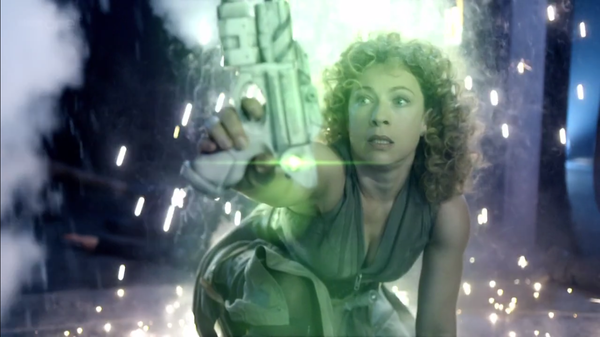
Aha! I fooled you! After all, there is and can only ever be one River Song, even if she is part-Timelord and can possibly even regenerate. But Doctor Who returns tomorrow, and I can't wait for more River, so to tide us all over, here's a few river-related tunes, along with my totally objective assessment of when/if she might listen to these songs.

1. Joni Mitchell - River

One of the most beautiful songs every written, the live version below is even more haunting.

Would River Song listen to this river song: I imagine she would listen to this pretty much constantly in her creepy house of quasi-death, along with her team of quasi-dead researchers. In reality, I can imagine Amy Pond listening to this song every moment she has alone, until she finds her daughter. "Now I've gone and lost the best baby that I ever had," indeed.

2. Creedence Clearwater Revival - Proud Mary

The ultimate Woodstock anthem, "Proud Mary" became successful twice over, as the Tina Turner version became an even bigger hit than the original.

Would River Song listen to this river song: Not only would she listen to this song, I would lay money down that she was at Woodstock in the crowd, and hooked up not only with CCR but with Jimi Hendrix, Bob Dylan and Joan Baez. Probably at the same time.

3. Bruce Springsteen - The River

I don't even know what to say about this song. Just listen to it. The video below is its first ever performance I believe, and the emotion is so raw. Just beautiful. Seriously.

Would River Song listen to this river song: Just a general comment on these river songs. They're all fucking classic songs in their own right. We know River hangs out with musicians, so maybe they all separately wrote songs about her. Maybe, just like the Doctor leaves random evidence of his existence throughout time and space, River leaves a bunch of awesome songs.

4. Led Zeppelin - When the Levee Breaks

My favorite Led Zeppelin song by far. The first time I ever heard it was actually when Tori Amos covered it, the day after the levees broke in New Orleans. It's a powerful song that perfectly captures the awesome power of nature with that driving guitar riff which seems to get bigger and bigger every second.

Would River Song listen to this river song: Yes. During sexy times. Which, in her case, is pretty much all the time. But you know what I mean.

5. PJ Harvey - Down By The Water

This isn't specifically about a river, but oh well. It COULD be a river. I posted the mashup below because it's the best. thing. ever. It's a mashup of "Down by the Water," "Silent All These Years" by Tori Amos, Bjork and Massive Attack. It's awesome. And you have to listen to it. I don't care if you don't like the artists, you need to listen to it anyway. It comes together beautifully.

Would River Song listen to this river song: Maybe not the original version, but definitely the mashup. "I'm going hunting for a mystery," indeed. And you know that River's taking fashion advice from all three of these women (fiery redhead with a wild mane of curly hair, who always has the most inappropriate outfit for any occasion). And while we don't know the whole truth about River, we do know that she is a mashup of some variety.

City Lights: Favorite Films Set In Berlin

6 Comments »

Fassade_Babylon2.jpg

Welcome to City Lights, a new series about favorite films set in different cities, inspired by an ongoing series at I Luv Cinema. We're kicking off with Berlin, mainly because I love Berlin, but also because I found it a little easier to narrow down the choices than other cities that will be featured (next time it could be Austin or New York, your choice!).

torn-curtain-w1280.jpg

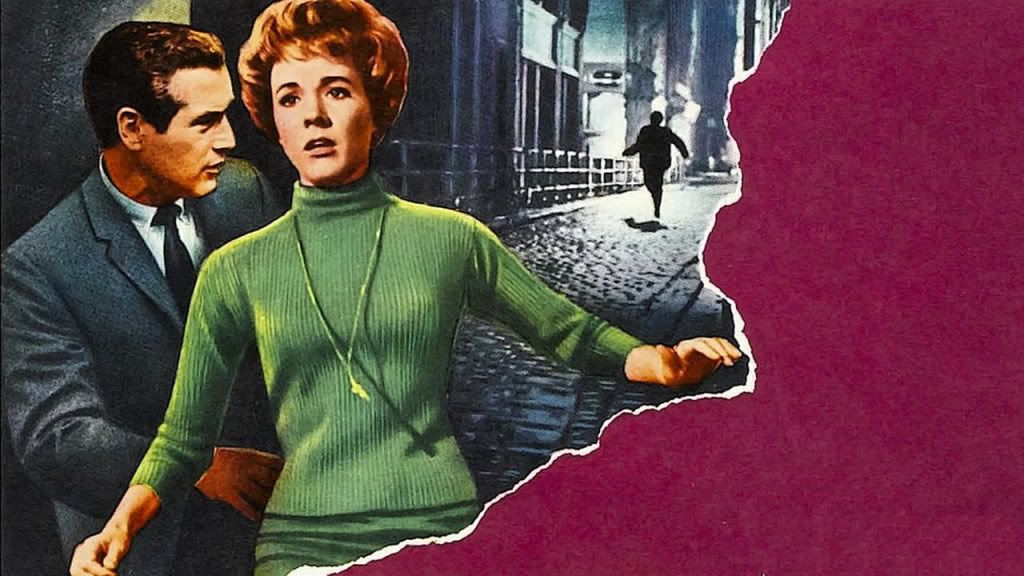
Torn Curtain, in many ways a lesser Hitchcock film, is entirely buoyed by its charming leads -- Julie Andrews and Paul Newman. Andrews was never more radiant, Newman never more mysteriously charming. Like other examples on this list, the film perfectly captures the paranoia of East Germany.

desire6.png

Wings of Desire is pure Berlin porn: Seriously, it's astonishing how different Berlin looks now from the Berlin of the movie, and Wenders adds another layer of context by comparing 1987 Berlin to what existed before the war. And if you've had the pleasure of visiting Berlin since the Wall came down, you can have a fun time in the slower bits identifying what stands now in the open spaces of the film.

3.jpg

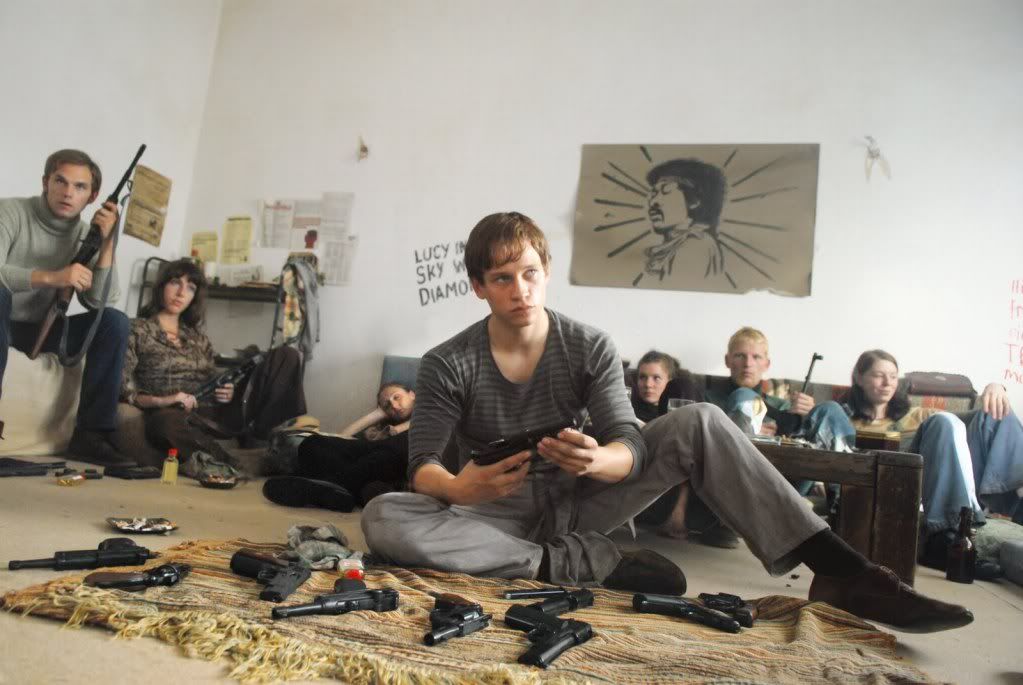
The Baader Meinhof Complex's been on my mind lately (to be fair, it's frequently on my mind in this age of polarization). When the first reports rolled in about Anders Breivik, I instantly remembered Ulrike Meinhof, who started off by making inflammatory comments in the mainstream press, then the fringe press, and then shifted into direct action and civil disobedience, followed eventually by extremism and mass murder. In both Breivik's case and the Baader-Meinhof gang's, young minds were taken over and infected by paranoia and rage at imaginary threats. It's easy to imagine that Norway's about to go through the national security soul-searching like Germany did in the 1970's. Important lesson: TERRORISTS ARE NOT ALWAYS BROWN.

run_lola_run_profilelarge.jpgRun, Lola, Run is one of the most successful foreign films of the past few decades, and with good reason -- it has the right mix of sex, violence, suspense and formal creativity to bring even subtitle-phobes into the theatre. More importantly, it gives a fast (very fast!) tour of Berlin, as Lola runs around getting into trouble.
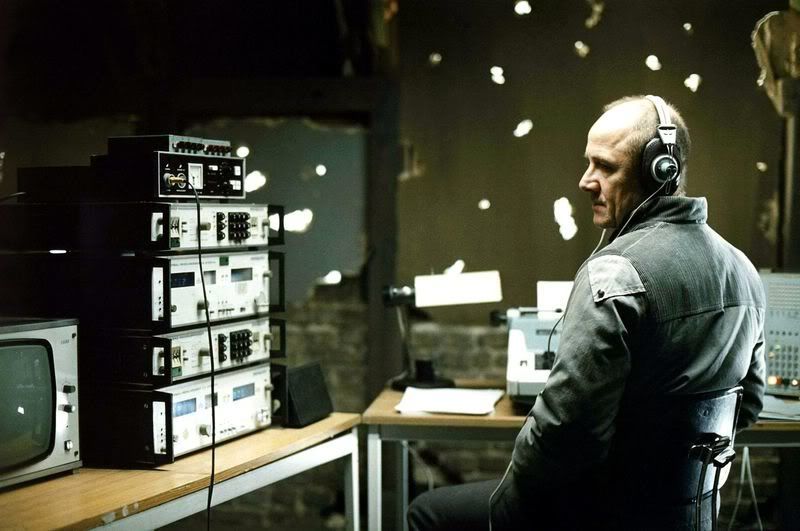
lives-of-others.jpgThe Lives of Others, better than any other film, shows the paranoia and danger that was part and parcel of life in the GDR. A city split in two, one side prosperous and the other side swimming in artistic and political repression. It's a moving film, demonstrating like all great fiction how to stay human in the most inhumane situations.

Weigh in! What are your favorite Berlin films? What cities should I cover in future?

10ish (Belated) Mixed Up Thoughts About Dark City

2 Comments »

dark-city-1998-07-g.jpg


Film Noir vs. Sci-Fi, not Sci-Noir

My friend @meckett (a living, breathing example of the lovely statement that "facebook is for keeping in touch with people you used to be friends with, while twitter lets you get to know people you really ought to be friends with") argued that the film did sci-fi and noir very well separately, but failed to integrate the two styles.

I sort of see his point; that action scene in the last half hour, while endearingly silly, did seem like a very obvious 'studio add-on' to a film that was much better structured as a noir. (Even the strangers, despite being not-quite human, fit in better as an expression of noir language than science fiction language. This is probably because there is absolutely no attempt to explain the "real facts" that lie behind the story; i.e. what has happened to humanity, who are these aliens, how does their 'tuning' work?)

However, I feel that this discussion is better served if we ignore that silly action scene. WIthout that strange psy-fight, the sci-fi elements were much more subtly drawn in; they were used to create atmosphere (why is there no sun, and why does no one notice? What's the deal with homme fatale Dr. Mengele aka Jack Bauer?).

More importantly, each of the elements contribute to the story; each has a specific purpose by the end. Everything that's wrong, that's odd, that's strange, is a direct result of the Strangers' failure to understand the core of humanity.

The Action Scenes are Profoundly Gilliam-Esque

That said, while the action scenes are completely extraneous, at least they're not boring. There's something curiously retro about how the psy-fight was conducted; Rufus Sewell and Mr. Hand literally stare each other into submission, while the entire world reforms itself around them.

Curiously Satisfying Ending

The ending is wonderful precisely because it undercut everyone's expectations (we all thought John wimped out to build Shell Beach, but he creates something far more sinister in many ways).

John has the power to create the world in whatever image he chooses, and hero tropes would dictate two possible options:

  1. He becomes megalomaniacal, consumed by his newfound power.
  2. He does what he can to return the populous to their 'original state,' the Locke-ian, Christian ending, returning humanity to their naive state so they can start fresh, avoiding the fruit of the poison tree.

But instead, he chooses option 3, wherein he does return some beauty to the world, but still leaves it absolutely clear where they are, that they're living in an illusion.

Successful Narrative

It really shouldn't, but the narrative somehow works. Maybe because the film doesn't try to make some definitive statement about what makes a human human (though it veers dangerously close), and instead leaves us with this odd think-piece of what aliens might do to discover where our essential humanity comes from. It's quite powerful, given how often we're fed the bit about our lives being nothing more than the sum of our memories; it's a foregone conclusion in so many sci-fi films. When the memories are entirely false, then what's left?

I Miss Miniature Modelling

CGI is so much better when grounded in realistic models. The sets in Dark City are absolutely stunning, and the movement of the buildings when the city was 'tuned' was gorgeous to watch (Cobweb Diamond admitted it was done better than in Inception, and she'd never say anything bad about Inception).

On Secret Superhero Narratives

There is clearly some superhero influence here, very understated, but justified by certain events.

A Rose By Any Other Name...

The names of the Strangers make perfect sense; they are a collective mind, so they divide themselves on what they perceive to be the unique attributes of humanity: face, sleep, hand, glove, etc. Notice there's no one named emotion, or love, or fear. To them, humanity is nothing more than a sum of physical processes, mixed with memory.

On Rewatchability

This is one of those special movies that actually improves on rewatch. There's no sleight of hand, all the answers are before us if we choose to recognize them. Nothing is so obvious that your hand is tipped too son.

The Connelly Factor

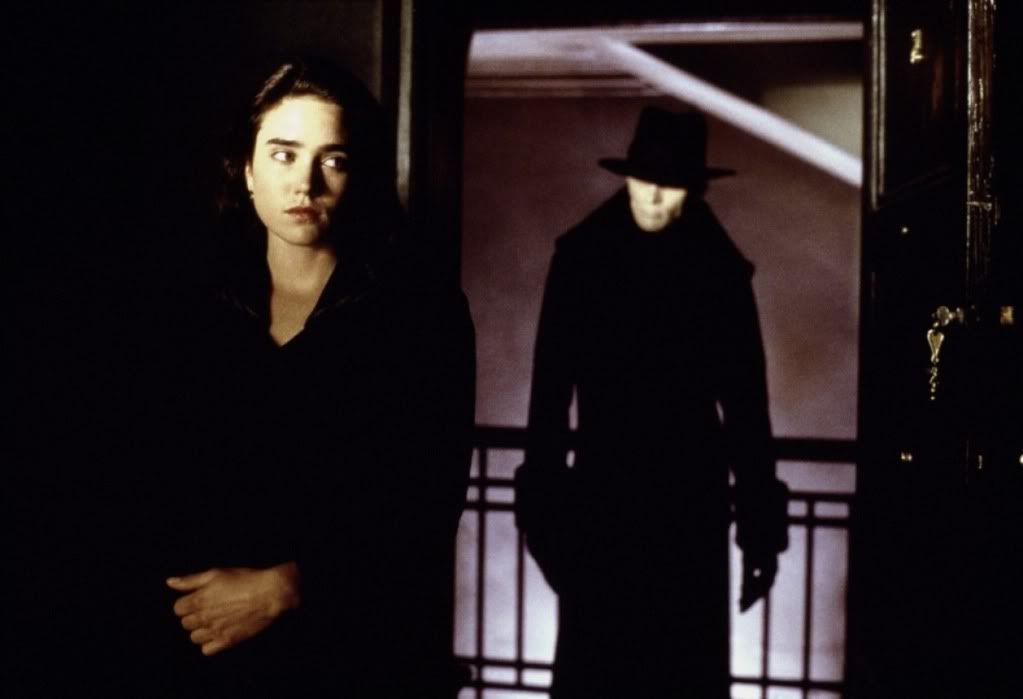
How cute is Jennifer Connelly in between chubby teenager and svelte sexpot? She still has the baby fat and the curves, and looks amazing.

Separately, Connelly has made one cult classic sci-fi/fantasy film in the 1980's, and one in the 1990's. Nothing in the 2000's, so she has a lot to make up for!

A Little Bit of Tribute to Elizabeth Taylor, RIP

No Comments »

Elizabeth-Taylor-Wallpaper.jpg


It may seem strange that I am moved to write this piece, despite the fact that I had not seen a single movie with her in it until today (you'll be getting a very special Filling the Gaps piece in the near future). She's the old type of Hollywood star, the type that we only know today through soundbites, little pieces of data about her many marriages and her odd friendships. But the outpouring of remembrance for her has astounded me. The amount of genuine love for her seems passé in this post-ironic age; people don't love her because she's a train-wreck, they love her because she's Elizabeth Taylor.

I find this all the more striking because, until today, her films weren't really talked about. They hadn't transcended time and space like Casablanca or Gone with the Wind or any number of French films, but she was wildly successful in her era, and was duly recognized by the Academy. In fact, the only times you really heard about her movies was when people discussed biggest flops of all time (Cleopatra ahoy!).

I wrongly believed that she was just a tabloid identity, a Paris Hilton of her times. But it's astonishing how much of her tabloid persona was in fact created by the studios (Taylor was one of the last actresses to be indentured to one studio). They knew that keeping her chaotic personal life on the front page would lead to sales, sales, sales. Which is a shame, because it overshadows her output. If you scan her IMDB, you realize the number of quality films she starred in was immense. As an actress, she created a cultivated  career the likes of Kate Winslet, Meryl Streep or Katharine Hepburn, not of Angelina Jolie, her match in tabloid success. You don't get offered that sort of role again and again, screenplays written by Tennessee Williams and Edward Albee, by just being a dilettante.

I'm also struck by how much women adore her (and gays, but we'll come to that). She was stunningly beautiful, but possessed neither the lusty beauty of femme fatales nor the girl next door attraction of contemporary Doris Day. There's something different there; her beauty is not superhuman but in fact alien. Simply put, she does not look American. Her beauty seemed universal, equally treasured in the dirty South, in the dark reaches of Africa, or anywhere in Asia. You can find actresses in any world cinema today; there's always one that looks a bit like Elizabeth Taylor. So while her films are perhaps not as influential or well remembered as they ought to be, her looks seem to have transformed what the world thinks of beauty.

So in that respect, she did finally become Cleopatra.

But she wasn't just a pretty face. Her AIDS activism is well-documented, and she was involved well before it was socially or politically acceptable to do so. Her long time and committed friendships to troubled stars such as Rock Hudson, Montgomery Clift and Michael Jackson signal an affinity for the downtrodden.

So here's to you, Mrs. Taylor.

Why Network is More Zeitgeist-Y Than Social Network

No Comments »

Network2.png


I loved Social Network as much as the next person, but I get very very irritated when I see middle aged critics talk about how "it's the film that defines a generation," or some rot of that nature. Perhaps facebook itself does that, but the tale of a nerd defeating his physical superiors with cleverness and wit is a tale as old as time. Nothing in the mechanics of how fictional Mark Zuckerberg achieves this gives credence to this critical canard; he is blinded by power and wealth and betrays his best friend; all the success in the world still doesn't get him the girl.

Network, on the other hand, continues to scream its relevance in my ear.

It Just Keeps Coming Up

Since I've seen Network, there have been dozens of occasions that have made me think "OMG it's Howard Beale in the flesh!" And now we have Charlie Sheen, making a direct callback of his own, calling on his fans to stick their heads out their windows and scream his sitcom catchphrase "Duh, WINNING!"

The Sheen case is probably closest in spirit to the actual narrative of Network: both Sheen and Howard Beale have on-air meltdowns upon the rumors of their firings, and these meltdowns make them media darlings. Both fall from grace when they commit the one cardinal sin of being a media property; they bit the hands that paid them. Both have kicked serious addictions, only to have those addictions replaced by dangerous paranoia (Saudis! Tigerblood! Octagons!).

But these similarities are merely superficial; what about the more serious issues raised by the film, the questions that society still tries to answer?

The Glenn Beck Factor

I saw Network the day before the shooting in Tuscon, Arizona. That day, my primary Really Deep Thought was: witness the birth of Glenn Beck, thirty years before his ascendance. After the shooting, my Really Deep Thought was more complex; that no matter how much power the Glenn Becks and Sarah Palins of the world might have within their own party, even they cannot control their own message once it goes out in the wild. And that is why it's important to control the message you send. To try and prevent it from being warped.

The movie never addresses the true societal cost of the media inflicting a man like Howard Beale on primetime airwaves. That his parochialism and paranoia might be infectious, that it goes beyond mere entertainment.

Beck is but one voice in a systemically dysfunctional culture; he fans the flames of existing animosity, but he can't be given credit for planting the seed. Which makes Howard Beale more powerful, in so many ways; he gets Americans to get off their asses and do something, even if that something is little more than swallowing their embarrassment and shouting out the window. It seems that the only way to kill the message is to kill Beale, but that's false. There's already another brand of lunacy ready to replace Beale in the form of the Symbionese Liberation Army.

We do not live in a cult of personality; we live in a cult of ideology. If you cut off the Beck tentacle or the Palin tentacle, the sea monster will merely grow back new limbs, powerful with fresh venom. Network does well to remind us of this; in public life, all are but cogs in a pre-fashioned wheel. Despite their best attempts, none of these three could actually spark a revolution. There's always someone more powerful who can put a stop as soon as things get dangerous; there's always someone who can redirect the conversation.

Feminism at War With Itself

Faye Dunaway's TV producer is absolutely glorious. She is consumed with ambition and success, but that doesn't make her hard or dissatisfied. She genuinely loves her life, she doesn't feel burdened by a lack of human connection. But the movie treats this as some sort of moral failing. The fact that ratings make her sexually excited is a form of deviance, a break from femininity.

These concerns might have been allayed if Bill Holden wasn't presented as the 'moral conscience' in the film, but he is. In fact, the penultimate scene is his widely praised speech about what a horrible person she is, and how little concern she has for other people. But perhaps Bill Holden is so wrapped up and convinced of his own guilt that there's no point in his admitting it; maybe he just wants her to admit her own culpability in the steady ruining of his life, to give him assurance that it isn't a disaster entirely of his own making.

Which is a bit rich given that he's the one who left his aging wife and disappointed his children on a whim, for a woman who said from the beginning that she's not into relationships. She never lied to him on this point, so it's patently unfair that he lays all the blame at her feet when he leaves. Especially cause we, the audience, know she'll just sweep the floor and get on with her life.

She's a successful career woman who happens to be awesome at her job, and he wants to make her feel bad about that. Not that she's without moral failing, but she is the Rand-ian ideal; she makes the best decisions possible to serve her own success.

ALL IN ALL

The questions that screenwriter Paddy Chayefsky raised so many years ago still lack clear answers today. To what extent is the media culpable for societal failings? Does rhetoric have the power to transform the vision of reality? Can we as a society tell the difference between fact and fiction? These are not the questions answered in Network; in the end the film is a satire of the network process for developing sensational television.

Howard reached a point where he happily and ingenuously constructed a temple to himself, but what about his millions of followers? They don't actually get their day in the sun, they just get to stand on their balconies and howl at the moon. And there will definitely come a point when shouting is not enough; they will crave action. And that's when you lose control of them. That's when you have Jared Loughner, desperate to make some kind of statement but lacks any defining ideology, who then latches on to the loudest voice of the moment.

What does it mean that Charlie Sheen and Howard Beale are not fired for their moral culpability, but for their embarrassment of the men who hold the purse strings? UBS (the fictional media corporation in the movie), like the Mafia, keeps it all in the family. As with the Mafia, there's no greater betrayal than giving away the family secrets. But in a Caesar-like twist the people who killed Howard Beale were the same schemers who crowned him Prince of Righteousness.

CBS has just fired Charlie Sheen. At least they didn't order his assassination.

Blog Noir: Gilda, Or, Fifty Ways to Torment Your Lover

1 Comment »

gilda.jpg


Gilda is the rare movie that you can love and appreciate in spite of the fact that it leaves more questions than answers.

That said, it has a lot of elements working in its favor, particularly the actors.

There's nothing I can say about Rita Hayworth that hasn't been said a thousand times before; she is stunningly beautiful and very capable in handling the contrasts between Gilda's dark emotional undercurrents and her oft-blinding brightness.

But I think Glenn Ford is the real coup here; when we meet him, he is characterized by an open, honest face and an easy wit, despite the fact that he's obviously a hustler. His blank physical appearance serves the chameleon character well; we see Johnny transform and distort in every direction possible as he faces growing success, power, torment and eventually redemption.

The direction was also startling; Gilda is not bathed in darkness as you might expect, but Vidor is careful and precise in his use of shadows and camera angles. There's very little that's showy, but everything works. Not to mention the pornographic camera gaze on Rita Hayworth's show stopping number; has there ever been a more erotic glove removal?

The film is also very clearly structured, which is in direct contrast to the seemingly incomplete story; we never do find out about the truth of Gilda and Johnny. That it is so well put together prevents the audience from feeling cheated; their past is something for us to put together in our imagination, and I bet what we imagine will always be ten times worse than the truth.

CONSIDERING THE HOMO-EROTIC

Critics and scholars get hung up with the question of original intent. But I would argue that's irrelevant in this case; we can only judge what appears to us on screen.* Even if you ignore the scary-comic scenes with Johnny, Ballin, and Ballin's little friend (a giant stick with the power of piercing!), there's considerable textual evidence to support the reading of homosexual leanings between the two male leads.

Let's look at Ballin. He is never represented as an altruist, and Johnny has no demonstrable skills when they first meet. So why invite him to his posh establishment? And what was a mover and a shaker like Ballin doing in the dingy alleyway in the first place, an alley full of hucksters and hustlers? It's not unreasonable to assume that he was trolling for sex, or something like it.

Later, once Johnny gets himself hired by Ballin, Ballin presents his first and most important rule: no women. He wants Johnny for himself. This clearly goes both ways. When Ballin returns from his trip, and announces his new wife, Johnny turns hateful and distrustful even before he knows that it's Gilda. The homoerotic angle adds a whole layer to the early antagonism between the two; he hates her in equal parts for coming between himself and Ballin, for showing up in his life at all, and for making him love her.

That none of these elements supersede the others perhaps reduces the relevance of the past relationship between Gilda and Johnny; what we are concerned with is how Johnny's conflicting desires play out now in Argentina. Youthful indiscretions are nothing but fuel to the fire; we don't need to know the facts to appreciate that it was heinous enough to mutate these two characters into shells of their former selves.

When Johnny steps into the role of Ballin, he becomes Ballin entirely; he absorbs his cruelty and sadomasochism as completely as he absorbs his penchant for shady business dealing. And that darkens his relationship with Gilda even further.

What makes the second act so compelling is that having done every thing they can to deny their love for one another, they can no longer resist its pull. And giving in warps them both; it gives Gilda a sense of security that she is incapable of recognizing as false, as she's never experienced the real thing. And it gives Johnny a vehicle to exercise his newfound power and sadism. He can't deal with his desire for her, cannot even act on it, so he chooses to torment her in every way possible. Gilda is powerless as a woman, as an individual, as a lover. Their mutual obsession twists them both horribly out of shape.

These are not the emotions of children at play, no matter what Ballin believes of Gilda. And while the movie wants us to believe it's about sex; it's equally about power. Ballin has all of it until he's dead, then Johnny inherits it. And Gilda has nothing but her sexuality.


*I say it's irrelevant, but that didn't stop me from researching. And I found this:

“Women in Film Noir”, Edited by E.Anne Kaplan, chapter 8, footnote #3.

“According to Ford, the homosexual angle was obvious to them at the time; they could see the implications in the relationship between the two men in the early part of the film- nothing stated, just mood.”

From John Kobal: “The Time, the Place, the Girl; Rita Hayworth."

FEMINIST STREET CRED

Gilda is distinctive in that it's the first picture in Hollywood with a female screenwriter, female producer, and topline female star.

ONCOMING FIRSTS

-First Rita Hayworth movie (woohoo!)

-First classic film noir (shocking, I know!)


An Ode to Emma Stone, Easy A and the Accelerated Velocity of Terminological Exactitude

1 Comment »

easya.jpg

It is a well-established fact that when pre-judging the quality of a teen movie, you can make fair assumptions based on the actors playing the adult characters. Exhibit A: Mean Girls and its featuring of every great SNL player of the 2000s as parents to the various characters. Easy A has, in order of appearance, Thomas Haden Church, Malcolm Mcdowell, Stanley Tucci, Patricia Clarkson, Lisa Kudrow and Fred Armisen. It's like a Rogues Gallery of indie film Oscar winners! But none of that even matters compared to the show-stopping, scene-stealing, world conquering force that is Emma Stone.

Easy A's greatest strength is that it's not afraid to have a little fun. Take the early "Pocketful of Sunshine" scene, a bit of random silliness that shouldn't be funny, but really really is. Only because it's true. It's a peculiarity of Hollywood that filmmakers believe that when teenagers are alone in their rooms, all they do is stare dramatically at their ceilings or ponder their social lives and body image issues. But no. Sometimes we just dance like idiots to absolutely ridiculous songs without any shame or self-consciousness. (Another truth: normal girls who don't have social lives to speak of often have excellent relationships with their English teachers).

Olive, likewise, is not afraid to have fun, which is part of what makes her such a wonderful character. When a rumor runs amok, rather than go all mopey and philosophical about it, her Olive Penderghast throws herself straight into the fray, milking the recent rumors of her sluttiness for all they're worth. She's a great character; she doesn't get along with people her own age, but her defense is not open hostility, like so many outcast characters past. She protects herself with wit, humor and a healthy belief in her own superiority (which we, and she, gradually learn is fairly unjustified).

But from the beginning you can tell that she does what she does not because she's an opportunist (or at least not JUST because of that), but because on some level she thinks she's helping the downtrodden. So when things go inevitably wrong, it grows organically about of her growing discomfort with her fictional identity, which takes on a life of its own.

One thing I like about the movie is how important the adult characters are; we all know the silly trope that teen films and fiction exist in a void universe that adults cannot penetrate except as monsters or caricatures. But Olive is who she is because of her parents; it's clear that they gave her the confidence to do some things that are frankly insane. And there's an easy poetry about how her favorite teacher gets sucked into the story.

That said, the movie's not entirely perfect. There's a strange (but still funny) subplot about Olive searching for a higher power to give her a conscience, and the romance, while touching, is a bit shoehorned in. But hey, at least it doesn't drag. After all, it's a John Hughes homage at the end of the day, and you can't have that without a kiss at the end.

I know it's a little hyperbolic to say this based on one movie, but I don't think I'm wrong in saying that Emma Stone is going to be one of the great comedienne's of our time. She has an odd attraction that's not exactly classical. She's got a wonderful deep voice that hearkens back to the stars of the 1930s, not the high pitched teens that seem to have dominated for the past couple of decades. But unfortunately, her rocket ship is heading straight up into big Hollywood drama (she's the lead in the film version of The Help and in the new Spiderman reboot). But I bet she'll make a great Gwen Stacy.

Favorite scene: When Patricia Clarkson and Stanley Tucci play a guessing game to find out which swear word got Olive sent to the principle.

Trailer:

Movies You Missed: Night Catches Us

No Comments »

4.jpg


Have you ever seen something and gone, "My GOD! Why has no one told this story before?" It doesn't happen often in the realm of film, and when it does happens, it almost feels subversive. Night Catches Us tells of an African-American neighborhood in 1970's Philadelphia, where race issues haven't gone away entirely, but fighting the good civil rights fight has given way to middle class compromise. We soon learn that the scions of the community were formerly Black Panthers, and despite the systematic dissolution of that group, the members still betray their past lives in uncomfortable ways and in slips of the tongue. But there are no illusions; the movement is dead. It was lost, lost when politics gave way to violence and rage.

It's amazing how much is crackling just beneath the surface of these people's lives - fighting the revolution now means nothing more than keeping the kids out of trouble and out of the hands of the cops.

The story centers around two in particular: Kerry Washington as Patricia, an attorney for the underprivileged, and Anthony Mackie as Marcus, the man accused of betraying the group to the cops, leading to the death of one of its members. He knows better than to show his face, but had no choice when his father died. When they meet, sparks of history fly; these sparks do not go unnoticed by her daughter, constantly searching for an answer to the question of why her father was murdered.

The beauty of the film is that writer/director Tanya Hamilton passes no judgment on the Panthers themselves; she neither lionizes nor demonizes them. She focuses on the conflict within, how even within a particular movement there are conflicting ideologies, economic differences, philosophical differences. When we learn about history, we are taught to see movements of people as solid blocs. Hamilton reminds us otherwise, that in the end there were only two broad movements fighting for civil rights, and just as in politics, there's no way that every single person agrees with every core tenet of the movement they join.

But this is a love story, not a polemic. The peculiarities of Black Power politics certainly set the stage, but it doesn't make the story. The story is about what happens after. What happens when reality is forgotten and a younger man decides to take up the mantle without any understanding of the failures or the challenges, and only hawks the talking points and brandishes the gun. About what happens when someone you once regarded as a brother or sister has mutated beyond recognition, either warped by inner darkness or compromised to society.

It's a fascinating rewrite of history; for every peaceful revolutionary movement, there is an equal and opposite violent movement, but the second is omitted. We learn about Martin Luther King but not about the Black Panthers. We learn about Mahatma Gandhi but not about Subhash Chandra Bose. There's a strong case to be made that both sides are necessary for a movement to succeed.

Finally, it's been a dreadful year for diversity in the Academy Awards. I have now seen Kerry Washington in two stellar performances from last year, and am shocked by the banality of the best actress nominations this year (and am strongly fighting the urge to make another dig on Natalie Portman's horrendously flat performance in Black Swan). Anthony Mackie is also terrific. I think that the lack of diversity speaks as much to the quality of mainstream films made about and for minorities; they are loud, melodramatic and hysterical.

That's why it's doubly important to draw attention to movies like Night Catches Us, where no one needs to shout to get your attention, where no sobbing is necessary to leave the audience devastated. That's why this story is so surprising, and so valuable. It's not a perfect movie by any standard; it's more slight than perhaps it needs to be. But for what it illuminates, it's precious.

The Political Journey of Winona Ryder

1 Comment »


I recently rewatched Heathers for the 100th odd time (though it's been years since I last saw it). This film is every bit as subversive, clever and witty as it was when it was first released, and this is due to a number of things: Daniel Waters' whip-smart screenplay, young Christian Slater at the height of his outcast mystique, but mostly because of Winona Ryder's scarily humanistic portrayal of a complete sociopath.

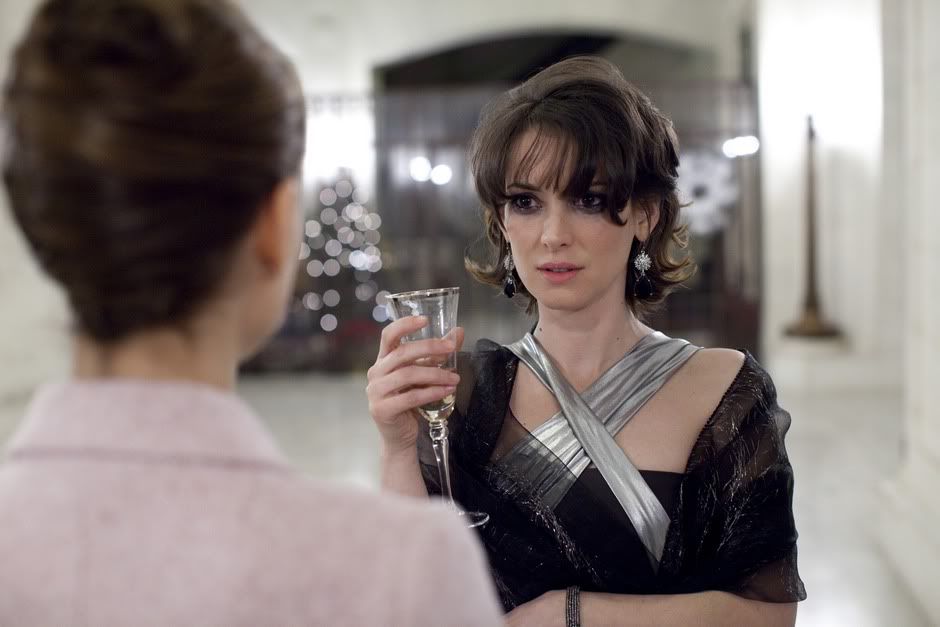
Fast forward through Generation X, where she was one of the big stars, and look at her now. She's consigned to irrelevant roles like her 2 minutes in Star Trek or her Norma Desmond grotesque in Black Swan. But in many ways, the character she plays in Black Swan is the perfect reflection of herself. She dazzled the world with her artistic talents in her youth, then she's shoved aside in favor of the younger star, but she definitely does not go quietly.

It's astonishing to think that an entire archetype would not exist without Winona Ryder: the moody outsider who flies dangerously close to the dark side but never loses her firm belief that the world has no purpose except to provide a vehicle for her sarcasm and narcissism (there have been many male characters of this nature, but Ryder's take is uniquely female, and infinitely more strange than the Holden Caulfield type). Teen girls would never be the same. There would be no Mean Girls or Buffy without the road paved by many classic Ryder characters.

But all this got me thinking: what the hell happened? Where did it all go wrong? I don't have a definitive answer, but one thing is obvious; Winona Ryder is making the same journey made by many a politician.

So Winona starts out angry and ready to take a stand in Heathers. But she quickly learns, thanks to Christian Slater, that direct action is initially life-affirming but can end up blowing up in your face (quite literally in this case). You live life on the edge and you want as many people to know about you as possible (Wino Forever!).

Then, In Reality Bites, we're basically watching phase II of Veronica's growth as a political activist. We see her compromise her ideals in the hopes that compromise can lead to actual movement. But just as the day-to-day business of politics seems to corrupt its essential participants, this means that Lelaina sells out (to Ben Stiller!), and ends up destroying her budding career.

So as we all know, politicians have three options when they get voted out of office: you can attempt to redefine your identity, you can turn to a life of crime in the form of lobbying, or you can go straight to jail. Winona Ryder managed to do all three. Redefining herself took the form of period dramas such as Age of Innocence, Dracula and The Crucible, all of which are terrible. They are terrible mainly because Winona has to play fragile characters, flowers hiding from the sun, so they waste her particular appeal (and also there are multiple dodgy accents). (Little Women is great though). Repeated failure can make politicians crazy (see John McCain), and so went Winona - she ended up in the loony bin (Girl, Interrupted). But she wasn't the looniest in the loony bin, so people only remember Angelina Jolie from that movie.

So, just like McCain, this apparently inspired Winona to ramp up the crazy. Which brings us to the Free Winona! phase of Winona's journey (aka life of crime and straight to jail, all in one). A career crash of such epic silliness is hard to imagine, and hasn't been matched until Britney Spear's similarly unforeseeable breakdown. Supporting evidence for craziness: co-starring in an Adam Sandler movie.

So the inevitable followup to a highly publicized flameout is steady obsolescence. And so it seems that after this rollercoaster journey, Ryder is doing the actorly equivalent of the quiet retirement to the ranch - character roles. I for one can't wait to see her next act. Which, if I had to predict using this labored metaphor, probably means she'll become a pundit on CNN or Fox News.

Actresses Who Take Stabs at (and Usually End Up Stabbing) Music Careers

No Comments »

Some of the most respected actresses of the past 15 years have made attempts to launch music careers. The lucky ones never got off the ground, so people don't remember their mishaps. I'm here to correct our collective amnesia. Please, please, please listen to these songs. And then, for your own sake, forget them immediately afterwards. This article seemed like a good idea, but there is one very significant downside: I had to actually LISTEN to these damn songs.

CATHERINE ZETA-JONES
Ok, we all know she can sing. But did you know she had two top 40 hits in the UK before she ever became a successful movie star? The voice is there, but the songs are not. Youtube For All Time for a far more hilarious video, where she's apparently dancing with Spartacus. I posted this one mainly because it's 'slightly' less embarrassing.


KATE WINSLET
Godawful. Maybe the worst of the lot. I'm trying to imagine what was going through her head: "Uh, hey guys, I've had four unsuccessful Oscar nominations, so maybe I can win a Grammy instead?" This particular act of musical violence reached #6 six on the UK charts (I am starting to think that absolutely anything can make it onto the UK charts!)


MINNIE DRIVER
She had two minor hits, Everything in My Pocket and Invisible Girl. The former is very much of its time but not offensive. It has the shoegazy quality of Ivy or early Dido. I am embarrassed to say though, I really like Invisible Girl. She sounds a bit like PJ Harvey singing a song by the Corrs. Which really is much more successful than Winslet and Zeta-Jones embarrassing Mariah Carey impersonations. (Really Driver's songs still aren't great, but in comparison they are masterpieces.)

Unfortunately EMI will not allow me to embed the video (sucks for you!) but here's the link should you still be intrigued:

Invisible Girl

GWYNETH PALTROW
Do you remember the duet she did with Huey Lewis, "Cruisin?" It was from some movie that no one actually wanted to see, but this song was EVERYWHERE. No offense to Gwyneth, she actually has a singing voice I wouldn't mind hearing more of, but the SONG IS DULL AS PAINT! She did also butcher "Bette Davis Eyes," rom the soundtrack to the same movie. More recently, she  performed on stage with Jay-Z for some reason. Street cred? God knows. Gwyneth is less forgivable because unlike the other actresses mentioned so far, she hasn't actually been in a decent movie in like ten years. Too busy writing about crazy diets.


NICOLE KIDMAN
Nicole Kidman wins the contest hands down. She had no pretensions to a music career, but still managed to guest on a fantastic song that was a pretty sizeable international hit. Back in high school, I knew many people who tried to copy the delicate harmonies between Kidman and Robbie Williams on in the hallways. Come What May, from Moulin Rouge, was also a pretty big hit as I recall (it counts because it's not actually in the movie in full!) Here's Something Stupid, for a lovely song and a sexy video. (that's the other thing about the previous contenders, they took beautiful actresses and stripped them of any sexiness!) In fact, I seem to remember this video being censored in the US.


LESSONS FOR FUTURE ACTRESS-MUSICIANS  
Rule #1: If you are a successful actress and you want to parlay that success into a music career, DON'T!
Rule #2: If you ignore Rule #1 and go through with it anyway, release your singles in the UK, where most of the moviegoing public won't find out about it anyway.
Rule #3: If you simply must have international recognition of your talents, try and tag along with a more famous singer, all the better to cover up your 'talents.'
Rule #4: Really, you should only do it if an already famous singer invites you to join him.
Rule #5: Nowadays, please only try this with smaller indie bands. (A separate post will follow about Marion Cotillard, Carey Mulligan and Scarlett Johansson, and other young superstars making quiet, quiet music instead of pop.)

Powered by Blogger.